
Pergola Dimensions Guide: How to Choose the Right Size


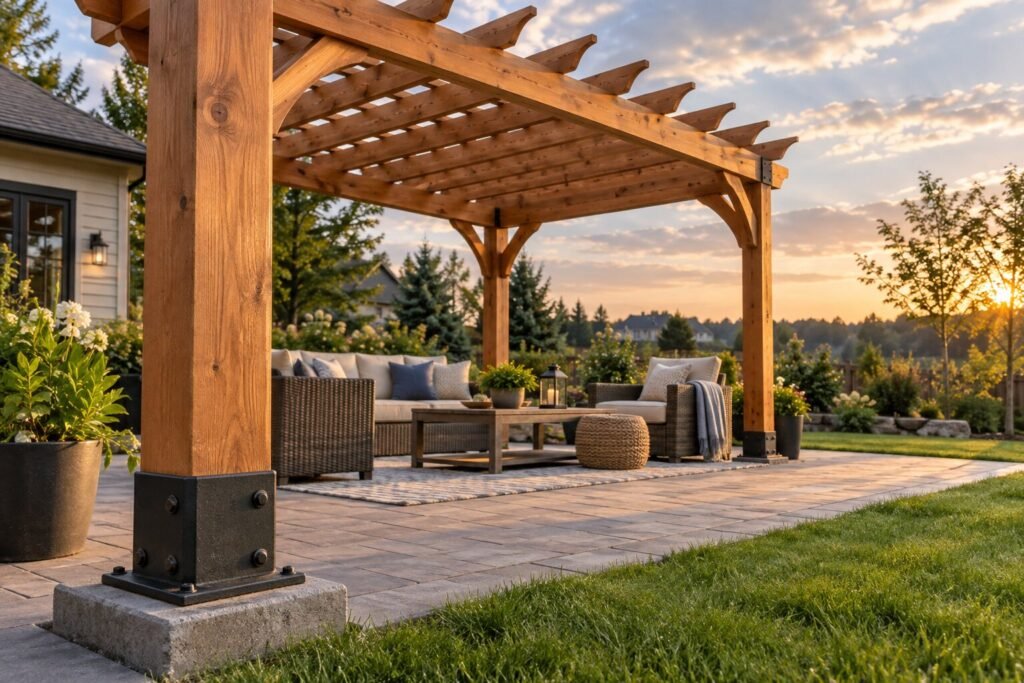
Choosing the right pergola size starts with the space you want to use underneath it—not only the total area of the yard. A pergola should feel proportional to the patio, leave comfortable walking paths, and provide enough room for furniture, doors, planters, and nearby features.
This guide explains how to measure your space, compare common pergola dimensions, and choose a practical size for dining, lounging, outdoor cooking, or a compact backyard. Product dimensions and installation clearances vary, so always confirm the manufacturer’s specifications for the exact model you are considering.
Start with the usable area
Measure the length and width of the patio or level area where the pergola may be installed. Then note anything that reduces the usable space, including exterior doors, windows, steps, railings, utility equipment, trees, garden beds, and drainage paths.
Do not assume that the entire measured rectangle can be covered. You may need open space around the structure for assembly, maintenance, roof overhang, anchoring, or local setback requirements. The manufacturer’s installation manual and local building rules should guide the final placement.
Common pergola sizes and practical uses
| Pergola size | Typical use | Planning notes |
|---|---|---|
| 8 × 8 ft | Compact seating or a small conversation area | Best for limited patios; choose furniture carefully to preserve walking room. |
| 10 × 10 ft | Small dining set or lounge seating | A versatile square footprint for many residential patios. |
| 10 × 12 ft | Dining, seating, or a mixed-use arrangement | The extra length can improve furniture placement and circulation. |
| 12 × 12 ft | Larger dining or lounge setup | Works well when the patio has enough clearance on all sides. |
| 12 × 14 ft and larger | Multiple activity zones or larger entertaining areas | Plan furniture, walking paths, anchoring, and site preparation before buying. |
These are planning examples, not universal standards. The labeled size may describe the roof, post-to-post footprint, or another measurement depending on the model. Review the dimension diagram before deciding whether a pergola fits.
Measure the posts and roof separately
A common measuring mistake is treating the advertised pergola size as the exact usable area between the posts. Roof beams or overhangs may extend beyond the posts, while the interior space may be smaller than the overall dimensions.
When comparing models, look for at least three measurements:
- Overall width and depth: the largest exterior dimensions of the structure.
- Post-to-post dimensions: the spacing that determines how furniture fits inside.
- Overall height: important near rooflines, tree branches, lights, fans, and other overhead features.
Mark both the overall roof outline and the post locations on the ground with removable tape, chalk, or stakes. This makes it easier to see the true scale before installation.
Allow room for furniture and movement
Place or outline the furniture you plan to use before choosing the pergola. Dining chairs need room to pull back, lounge seating needs access from more than one direction, and grills or cooking areas require manufacturer-specified clearances.
For a dining setup, measure the table and add the space needed for chairs and circulation. For lounge seating, consider side tables and the direction people will enter the space. If the pergola will sit near a patio kitchen, keep food preparation, seating, and walking routes organized without crowding hot equipment.
Choose dimensions for the way you will use the pergola
For outdoor dining
Start with the table dimensions and the maximum number of chairs you expect to use. A pergola that only covers the tabletop may feel too tight once chairs are occupied. A rectangular pergola often works well with a long dining table.
For lounge seating
Measure the full arrangement, including sofas, chairs, coffee tables, and side tables. Square pergolas often suit conversation areas, while rectangular models can help organize longer seating layouts.
For a compact patio
Prioritize the post locations and walking paths. A smaller, well-positioned pergola can feel more useful than a large structure that blocks doors, steps, or views from the house.
For multiple outdoor activities
A larger pergola may support dining and lounging in one covered zone, but each function should still have enough space. Sketch the layout to scale before choosing a model.
Consider sun direction and shade coverage
Pergola dimensions affect how much of the patio receives filtered shade, but roof design and orientation matter too. Open-roof pergolas do not provide the same coverage as a solid roof. Slat direction, sun angle, time of day, and season all influence the result.
Observe the planned location in the morning, at midday, and during the late afternoon. If shade is a priority, compare the pergola’s roof style and compatible shade accessories in addition to its dimensions.
Check the site before ordering
Confirm that the area is level, stable, and suitable for the required anchoring method. Review access for delivery and assembly, and identify underground or overhead utilities before site work begins. Local permits, setbacks, wind requirements, and homeowners-association rules may also affect the size or location you can use.
For a broader comparison of materials, placement, and everyday use, read our complete pergola buying guide. You can also review our backyard upgrade ideas when planning several outdoor zones together.
Pergola dimension FAQs
What is a good pergola size for a small patio?
An 8 × 8 ft or 10 × 10 ft model may work for a compact seating or dining area, but the correct choice depends on post spacing, roof overhang, furniture dimensions, and required clearances.
Is the advertised pergola size measured between the posts?
Not always. Some manufacturers list overall roof dimensions, while the usable post-to-post area is smaller. Check the product diagram for both measurements.
How much space should be left around a pergola?
The required space depends on assembly, anchoring, maintenance access, roof overhang, utilities, property setbacks, and the manufacturer’s instructions. Confirm these requirements before marking the final position.
Should a pergola be larger than the furniture underneath it?
Usually, yes. The covered area should account for chairs, tables, movement, and comfortable entry rather than matching only the furniture footprint.
Browse outdoor pergolas from True Yard Buildings and compare the manufacturer’s overall dimensions, post spacing, height, anchoring, and installation requirements before purchase.
Plan the site before delivery
Once you have chosen the pergola dimensions, verify the full footprint, foundation, anchoring method, and delivery access before ordering. Use the Outdoor Structure Planning Center, follow the site preparation and delivery checklist, and review the anchoring, wind, and snow load guide.




One thought on “Pergola Dimensions Guide: How to Choose the Right Size”